Why Women Wore Veils in the Early Catholic Church: The Ancient Christian Tradition of Veiling
The Ancient Christian Tradition of Veiling
As I’ve been learning more about the early Church during my journey toward becoming Catholic, I keep finding myself drawn to the traditions that shaped the faith of the first Christians.
The deeper I go, the more I realize how intentional they were about worship. Their faith wasn’t something casual or occasional. It influenced how they prayed, how they fasted, how they gathered, and even how they dressed when they came before God.
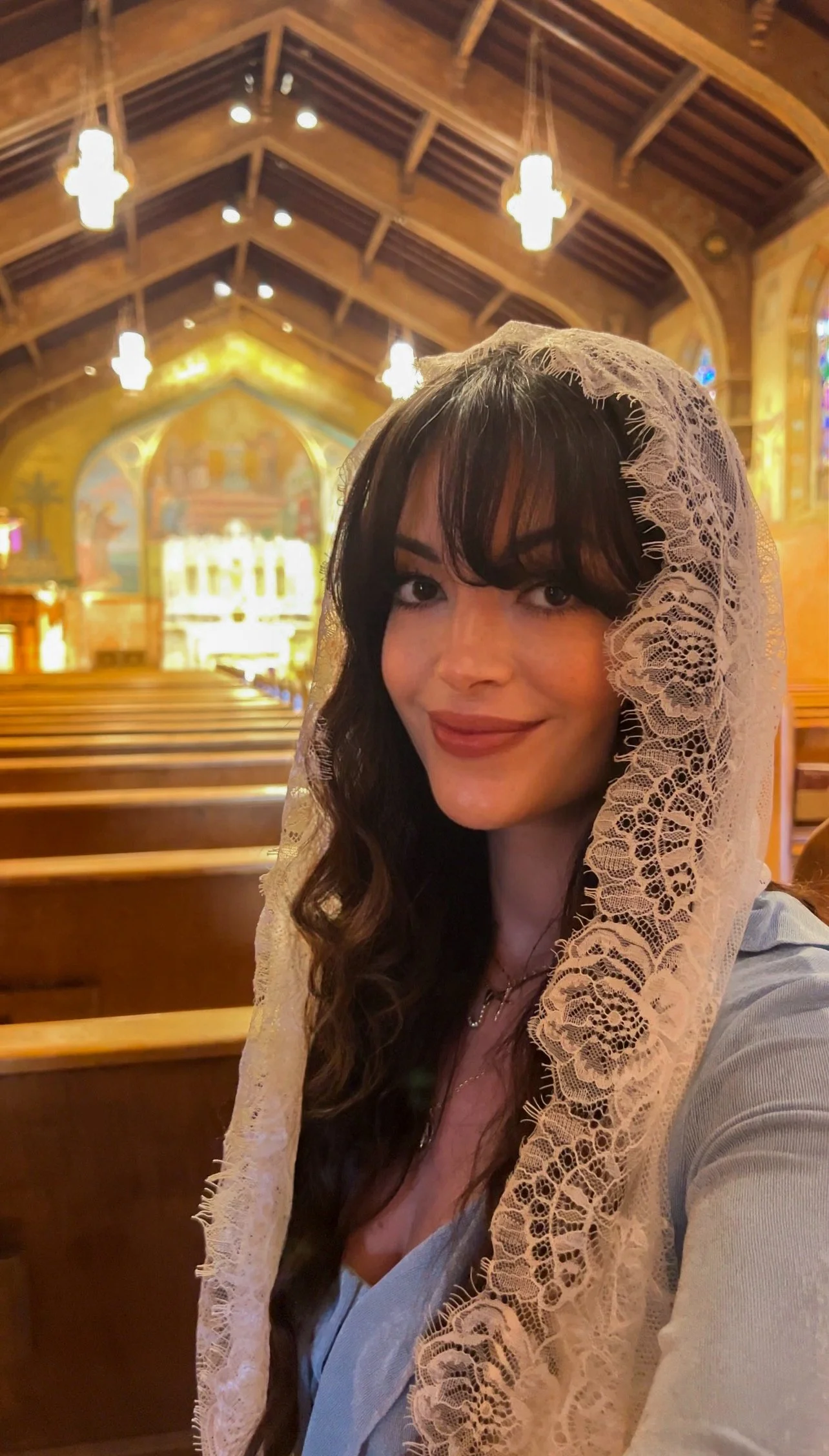
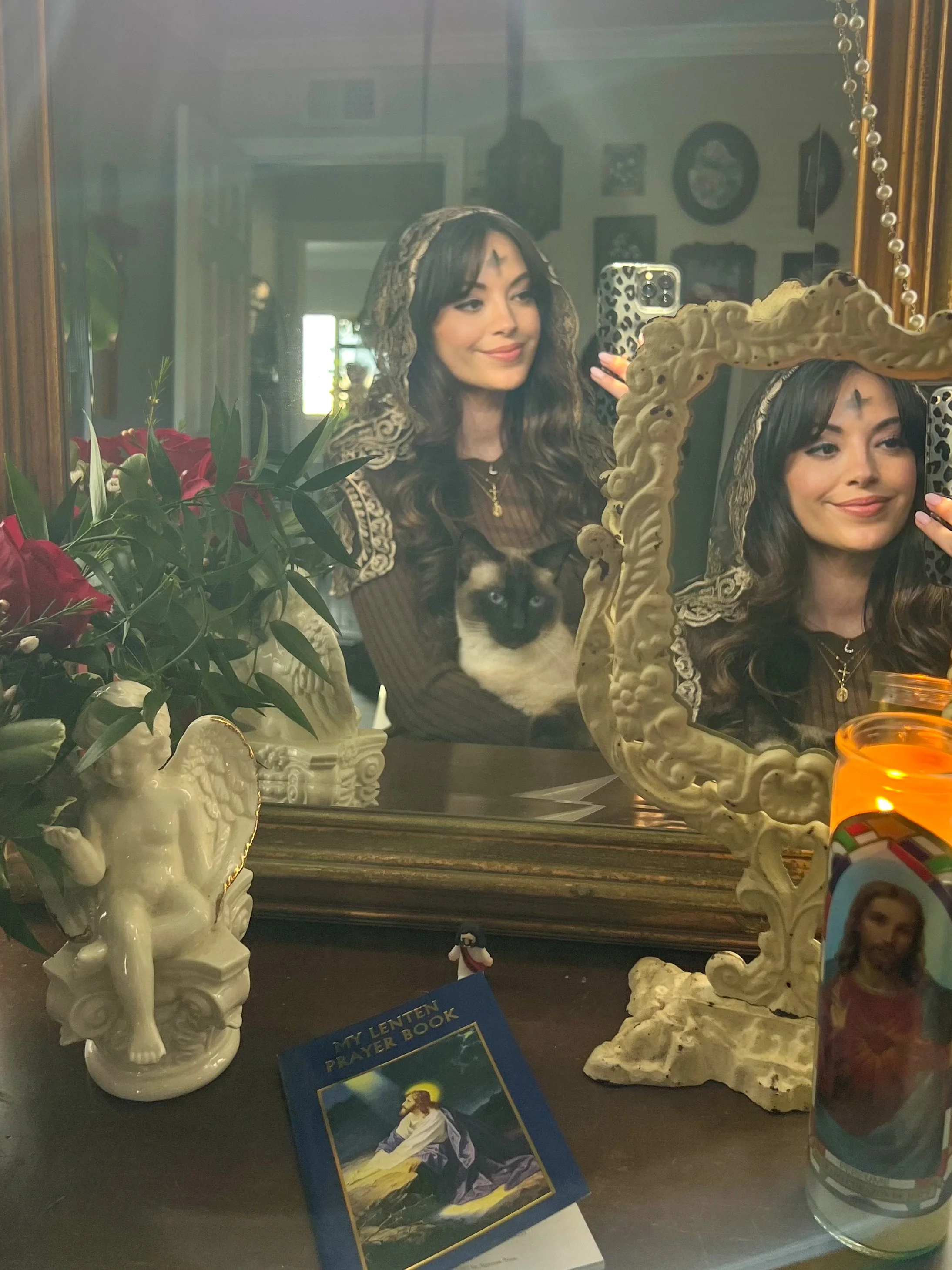
One tradition that appears again and again in Scripture, early Christian writings, and sacred art is the practice of women covering their heads during prayer.
For nearly two thousand years, Christian women across cultures veiled in church as a sign of reverence and humility before God. While the practice is less common today, its roots stretch all the way back to the earliest generations of the Church.
Learning about this tradition reveals something deeper than a piece of fabric. It opens a window into how the early Christians understood sacred space, reverence, and the presence of God.
Women Wearing Veils in the Early Church
The practice of women covering their heads during prayer comes directly from Scripture.
In his letter to the Corinthians, Saint John the Apostle gives clear instructions about head coverings during prayer and worship.
📖 1 Corinthians 11:5–6
“Every woman who prays or prophesies with her head uncovered dishonors her head… if a woman will not cover her head, then she should cut off her hair.”
He continues a few verses later:
📖 1 Corinthians 11:10
“That is why a woman ought to have a veil on her head.”
For the earliest Christians, this instruction was taken seriously and became part of the normal practice of Christian worship.
Early Christian writers also spoke about the importance of the veil during prayer. One of the earliest was Tertullian, who wrote a work in the early third century called On the Veiling of Virgins. In it, he encouraged Christian women to veil as a sign of modesty and reverence before God.
Another early Church Father, Saint John Chrysostom, also referenced the practice in his teachings, explaining that the veil reflected humility and respect during worship.
For centuries after the time of the apostles, women covering their heads during prayer was simply understood as part of Christian life. For much of Christian history, a woman entering church without a head covering would have been considered unusual.
Veiling Appears in Early Christian Art
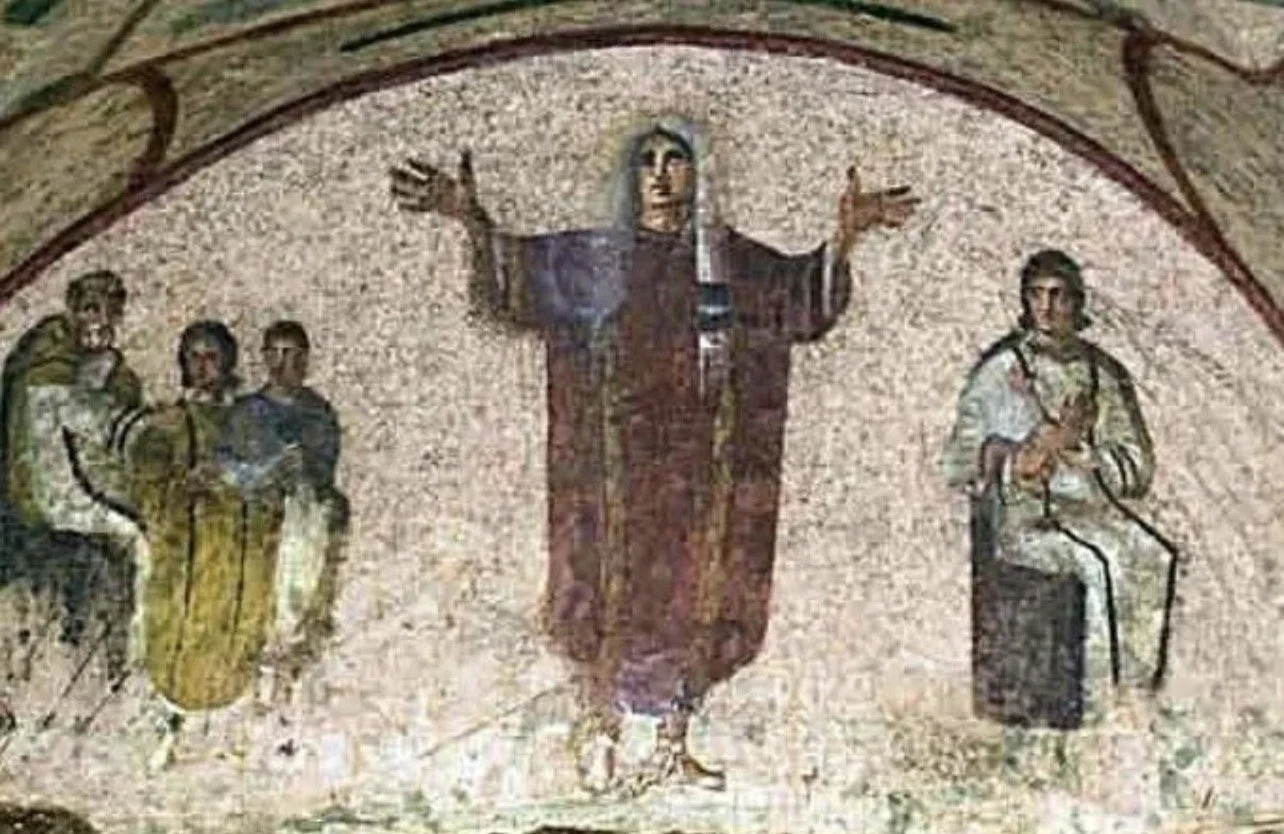
Archaeologists have discovered images of Christian women praying with their heads covered in ancient Roman catacombs.
Many of these images show women in the orans posture, a traditional position of prayer with raised arms.
These depictions show that veiling wasn’t only taught through Scripture and tradition, it was visibly practiced in early Christian communities.
The Practice Was Observed for Centuries
For most of Christian history, women covering their heads in church remained the norm.
The practice continued throughout the Middle Ages and into modern times. It was so widely accepted that it eventually became part of Church law. The 1917 Code of Canon Law required women to cover their heads in church.
When the 1983 Code of Canon Law was introduced, the requirement was no longer included, and the practice gradually became less common in many places.
However, the Church never forbade veiling. Because of this, some Catholic women today still choose to veil as a personal devotion during prayer and Mass.
Mary and the Symbolism of the Veil
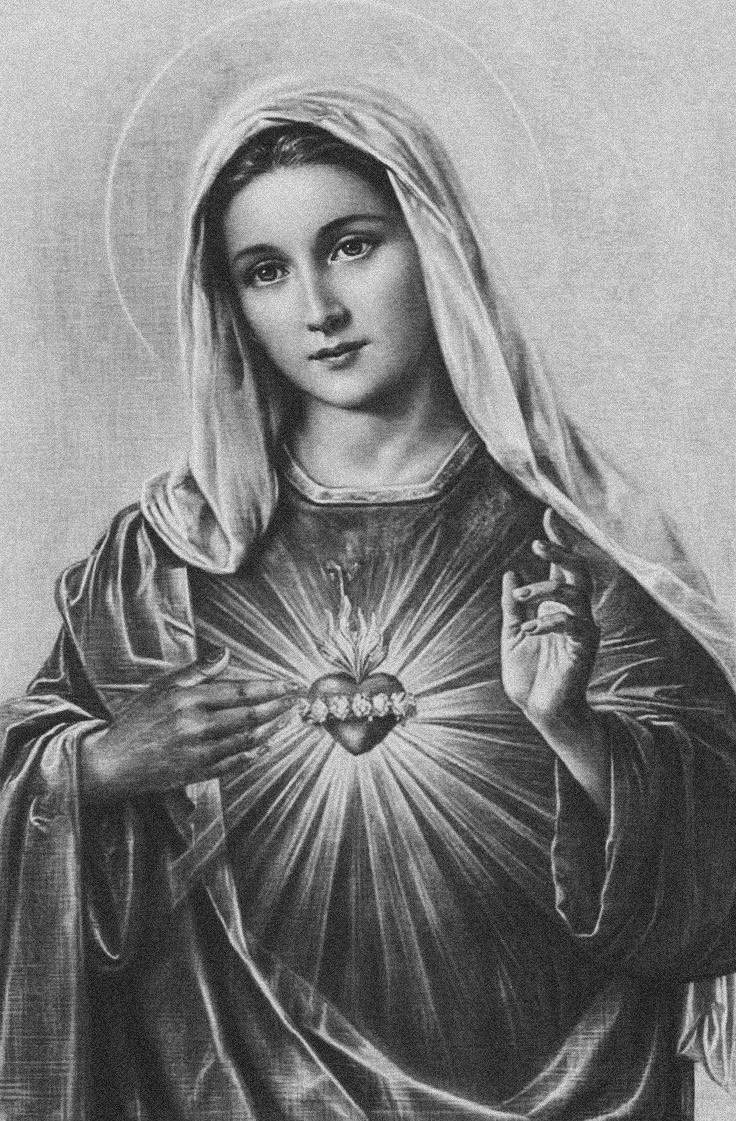
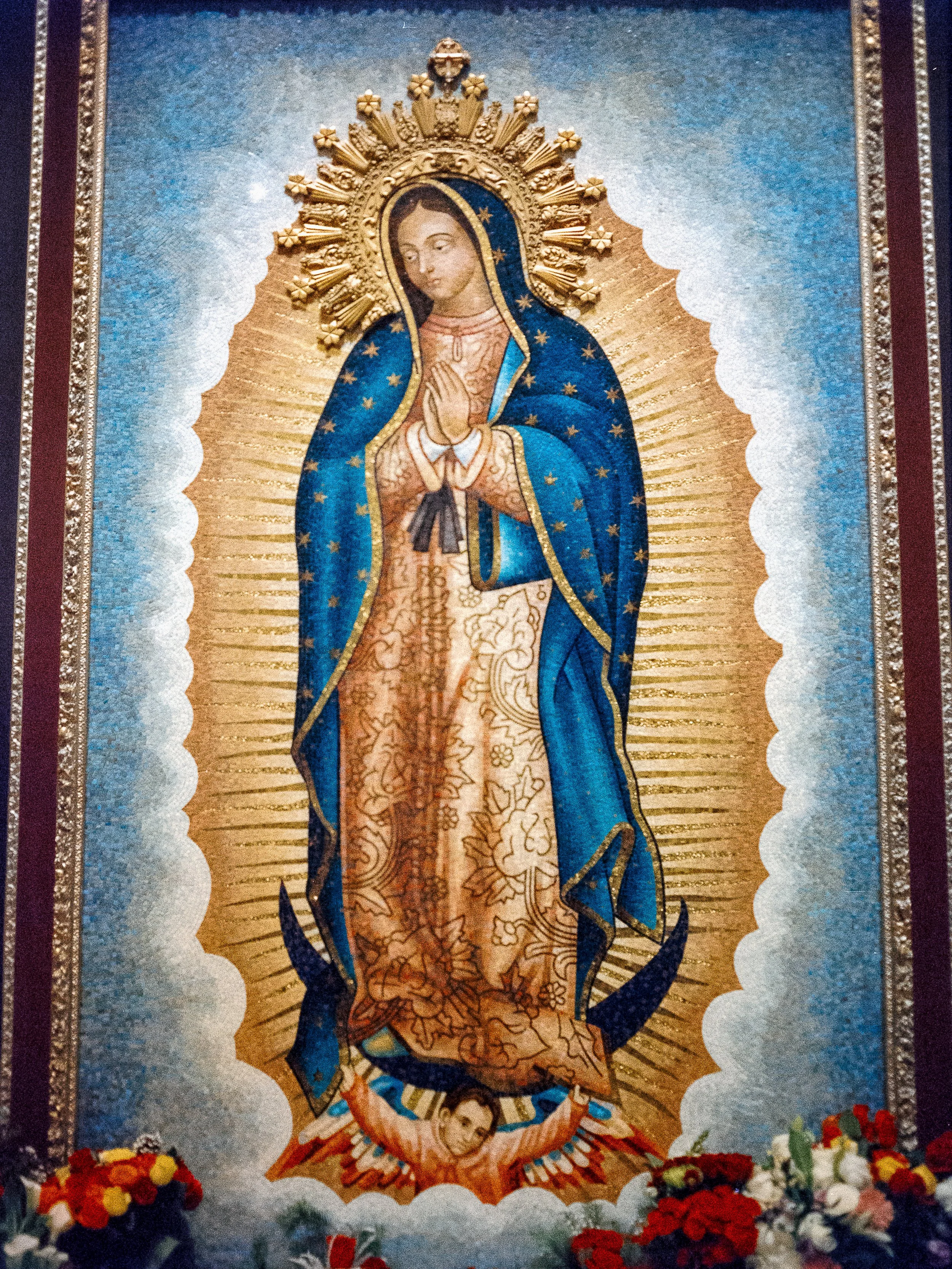
Another reason this tradition is so striking is how often we see the Blessed Virgin Mary portrayed wearing a veil.
In traditional Christian art and iconography, Mary is almost always shown with her head covered. This reflects the cultural customs of her time, when Jewish women commonly covered their heads as a sign of modesty and reverence.
But for Christians, Mary’s veil also carries deeper meaning.
She is often called the Ark of the New Covenant, the one who carried Christ within her.
📖 Luke 1:35
“The Holy Spirit will come upon you, and the power of the Most High will overshadow you.”
Just as the Ark of the Covenant in the Old Testament was treated with great reverence and often veiled, Mary is portrayed with a veil as a sign of humility and holiness.
Her response to God shows the heart behind this symbolism.
📖 Luke 1:38
“Behold, I am the servant of the Lord; let it be done to me according to your word.”
Throughout Christian history, Mary has been seen as the model of humility and devotion, a heart fully open to God.
Why Sacred Things Are Veiled in the Catholic Church
One of the most interesting things about veiling is that it is not only associated with women. Throughout Scripture and Christian tradition, veils are used to signify something sacred.
In the Old Testament, the most sacred place in the Temple, the Holy of Holies, was hidden behind a veil.
📖 Exodus 26:33
“Hang the veil from the clasps and place the ark of the covenant law behind the veil. The veil will separate the Holy Place from the Most Holy Place.”
This veil symbolized the mystery and holiness of God’s presence.
When Christ died on the cross, Scripture tells us that this veil was torn.
📖 Matthew 27:51
“And behold, the curtain of the temple was torn in two, from top to bottom.”
Even after this moment, the symbolism of veiling continued in Christian worship.
In the Catholic Church today:
the tabernacle is often veiled
the chalice may be covered with a veil
the altar is covered with cloths
statues are veiled during parts of Lent
These veils are not meant to hide something unimportant.
They highlight that what lies beneath them is holy.
The veil reminds us that we are standing before mystery.
Why These Traditions Still Matter
As I’ve been learning more about the early Church, one thing that keeps standing out to me is how seriously the first Christians lived their faith.
These weren’t just cultural customs to them. The traditions they practiced, whether fasting, prayer, or even something as simple as veiling, were ways of expressing reverence for God and reminding themselves that worship was sacred.
Many of the earliest Christians faced persecution, imprisonment, and even death simply for believing in Christ. Their faith shaped every part of their lives.
Because of that, I find myself feeling that these traditions are worth remembering and preserving.
Not because every Christian must practice them exactly the same way today, but because they connect us to something much bigger than ourselves.
They connect us to the generations of believers who came before us.
The Catholic Church is one continuous family of faith stretching back to the apostles. When we rediscover the traditions of the early Church, we are not inventing something new, we are stepping back into the rhythm of a faith that Christians have lived for nearly two thousand years.
For me, learning about traditions like veiling has made worship feel more intentional. It reminds me that when we enter a church, we are stepping into a sacred place where heaven and earth meet.
The early Christians understood that deeply.
And in a world where so much feels ordinary and rushed, I think there is something beautiful about remembering that some things are meant to be treated as holy.
📖 2 Thessalonians 2:15
“So then, brothers and sisters, stand firm and hold to the traditions that you were taught.”
In the end, these traditions aren’t really about clothing or customs.
They are about reverence.
They are about humility.
And they are about remembering that when we come before God, we are standing in the presence of something infinitely greater than ourselves.